
To Battle an Empire
Hussites, Žižka, and the Necessity of Innovation

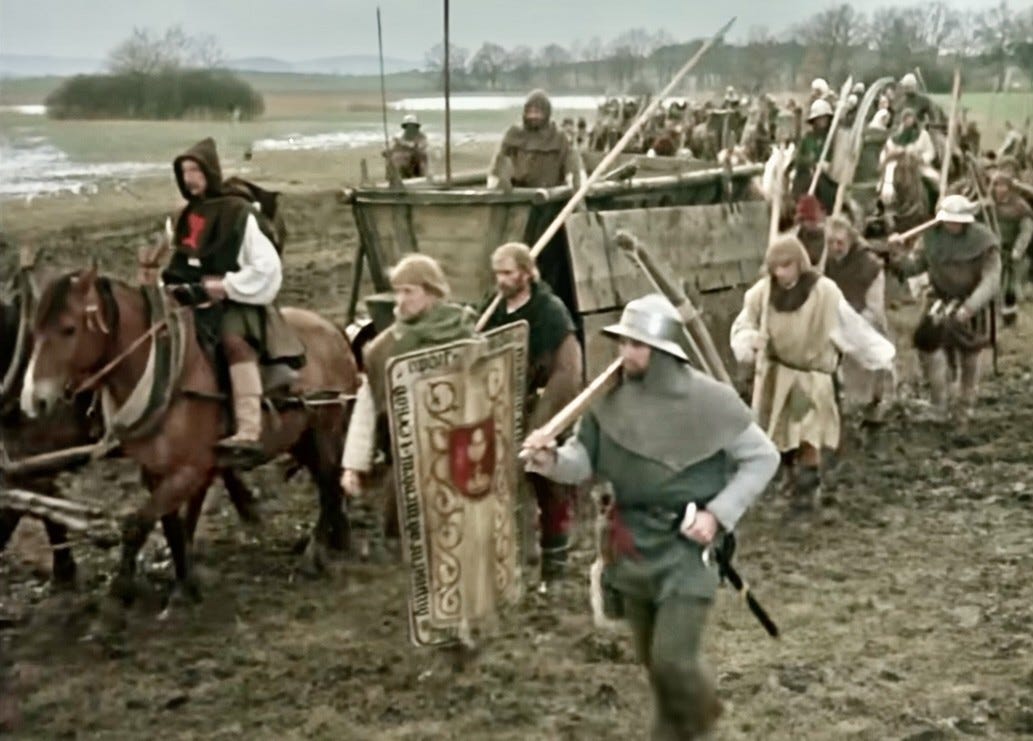
Images from the 1955 film Jan Žižka included under fair use for purposes of education and commentary. More on the history behind this movie coming up.
THE PROCESS
No doubt that worldbuilding and fantasy storytelling are major undertakings. It’s a passion project, a labor of love to create something new.
When it comes to reading new stories and exploring new worlds, I want to be all in. I want to see and appreciate the care and attention the worldbuilder has put into the world and the story. What makes this place unique? What makes this place tick?
One of my pet peeves about new settings is when all the component parts don’t quite seem to fit together. I don’t mean nitpicking the tiny details; I mean the larger elements — when they seem to exist in isolation, disjointed, unassembled pieces versus a cohesive whole.
Does the imagined setting feel like a place with depth and history or seem like a movie lot where the buildings only have one side?
I think this becomes clearest when forces are set in contrast or opposition to one another. For sure, it’s a lot just to think up faction A and faction B (and the characters therein), but that’s just the start of worldbuilding.
What is the history of the factions and the characters — and their interactions with one another? How do they plot and scheme against one another? What great plans do they have in mind? How do the factions and characters understand their strengths and weaknesses, their advantages and disadvantages?
And, if you actually pitted these forces against one another, how would things play out? Does the story have a gritty realism, or does it seem a propped-up contrivance to get from one plot point to the next?
This strategizing and counter-strategizing can turn quickly into 3D or 4D chess, but that’s the fun of immersive worldbuilding! It’s the reason this Substack exists.
WHEAT FROM THE CHAFF
There’s a place for the “rule of cool” but that also can be thin cover for handwaving, expediency, a deus ex machina.
Story elements should be pressure-tested and sent through a series of questions and thought experiments to separate the wheat from the chaff. Challenge yourself to refine the setting, keep the good stuff, and find ways to get the remaining pieces to fit (or fit better). By doing this, you’ll learn more about the world you’re building — and, in doing so, create more depth to the setting and characters.
To demonstrate this approach, let’s take an example from history as a case study.
History is a great teacher. History is a progression, an evolution. Why — because of what factors — did certain outcomes emerge? Asking questions leads to better answers and a more immersive setting.
FACTIONS IN CONFLICT
“If you know the enemy and know yourself, you need not fear the result of a hundred battles. If you know yourself but not the enemy, for every victory gained you will also suffer a defeat. If you know neither the enemy nor yourself, you will succumb in every battle.”
— Sun Tzu, The Art of War
Let’s take a historical example from late medieval Europe — the Hussites against the Holy Roman Empire. Scenes from the film Jan Žižka will be used as visuals.
What tactics did the Hussites use? How did they create advantages for themselves and counter the Empire’s strengths? More on that soon.
CONDITIONS FOR CONFLICT: A VERY BRIEF OVERVIEW
The Hussites are followers of Jan Hus, a Czech theologian and reformer who was burned at the stake for his teachings contrary to the Catholic Church. A few years following Hus’ death and continuing tensions, the Hussites revolted against Imperial authority. Crusades were declared to crush the heretical rebels who were notably led by Jan Žižka.
AGAINST ALL ODDS
Battling an empire is no small undertaking.
In terms of manpower and materiel, the Hussites’ resource base was far smaller than that of the Empire. In addition, much of the Hussite forces lacked military experience.
The elite core of the early 15th century Imperial army was the noble heavy cavalry. How could the Hussites stand against such a charge?
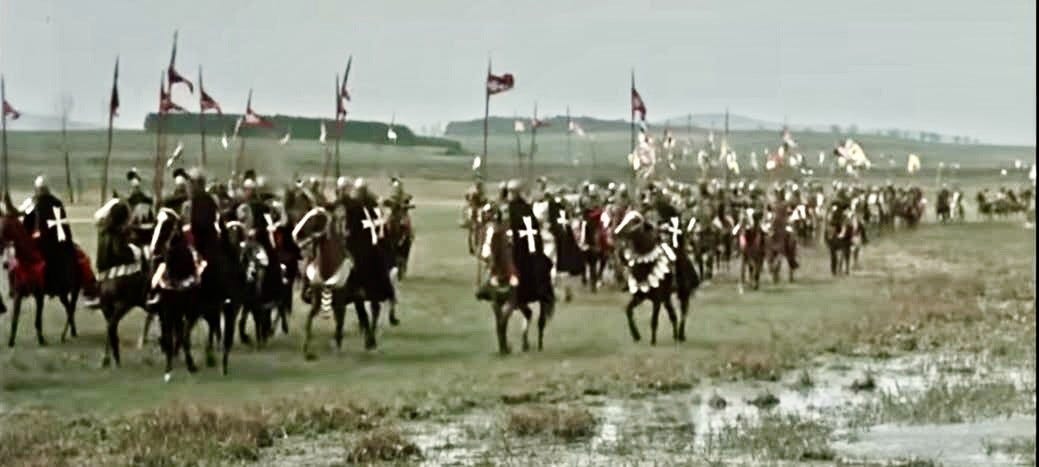
The Hussites knew that they best avoid fighting Imperial heavy cavalry in the open field, but how to achieve this? What should they do instead?
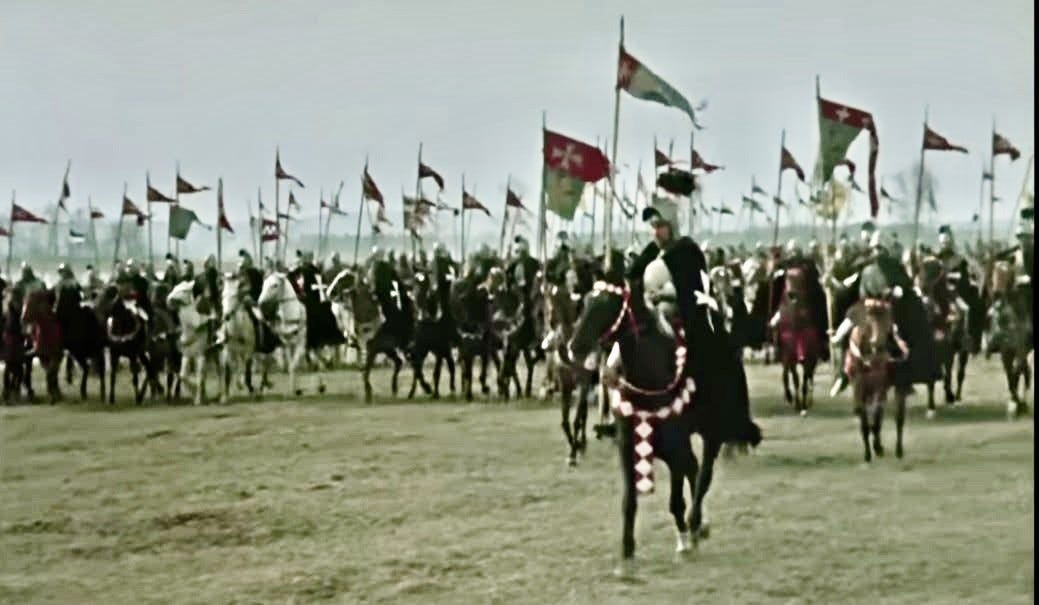
Led by Jan Žižka and others, the Hussites considered their strengths and weaknesses. From that, they created their own fighting style.
A specific component of the Hussite way of war keyed on minimizing the Imperial forces’ strengths. Take your opponents’ strengths and neutralize them. Remember the Sun Tzu quote from earlier in the article.
FORTIFICATIONS, FARM TOOLS, AND FIREPOWER
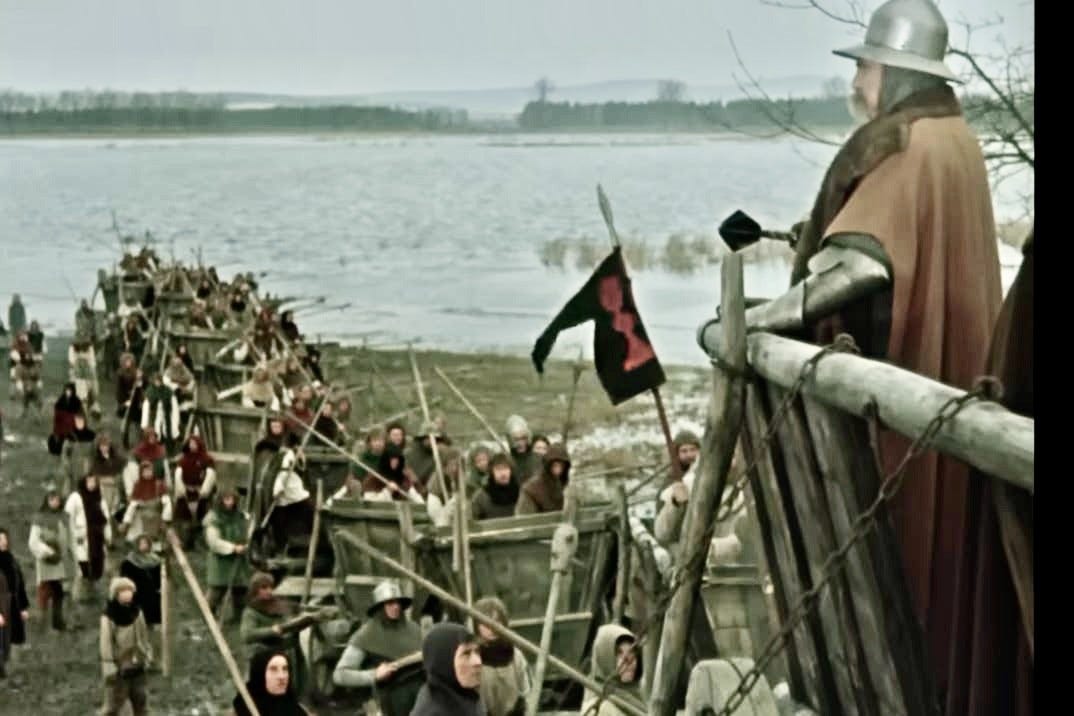
Jan Žižka [depicted on the right] understood the capabilities and limitations of his soldiers and that time was of the essence to organize an effective fighting force.
The Hussites used war wagons as fighting platforms and mobile fortifications. These war wagons with their reinforced and elevated walls were early precursors to the tank. When formed together, the wagons would negate or minimize the effectiveness of a cavalry charge, and in combination with other tactics would quickly shift the advantage to the Hussites. Selecting particular terrain which favored the defenders was another important part of the battle plan.
Many Hussites were farmers, so scythes and flails were in relative abundance and provided the defenders with a long reach from their wooden redoubts.
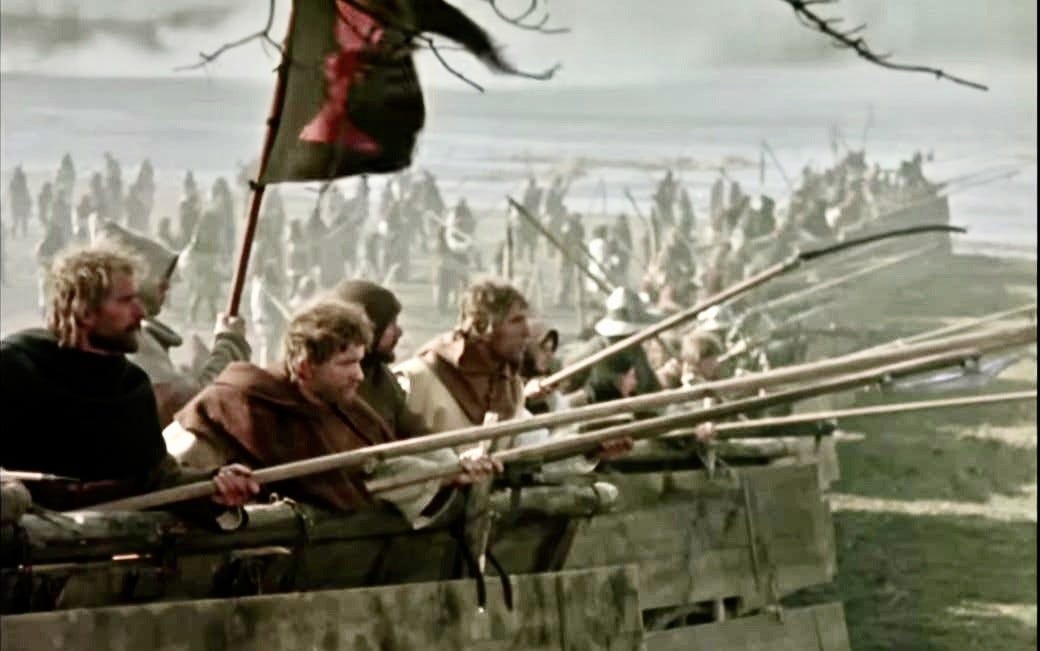
Achieving proficiency with a crossbow required less training than with a bow so the crossbow became a staple in the Hussite arsenal.
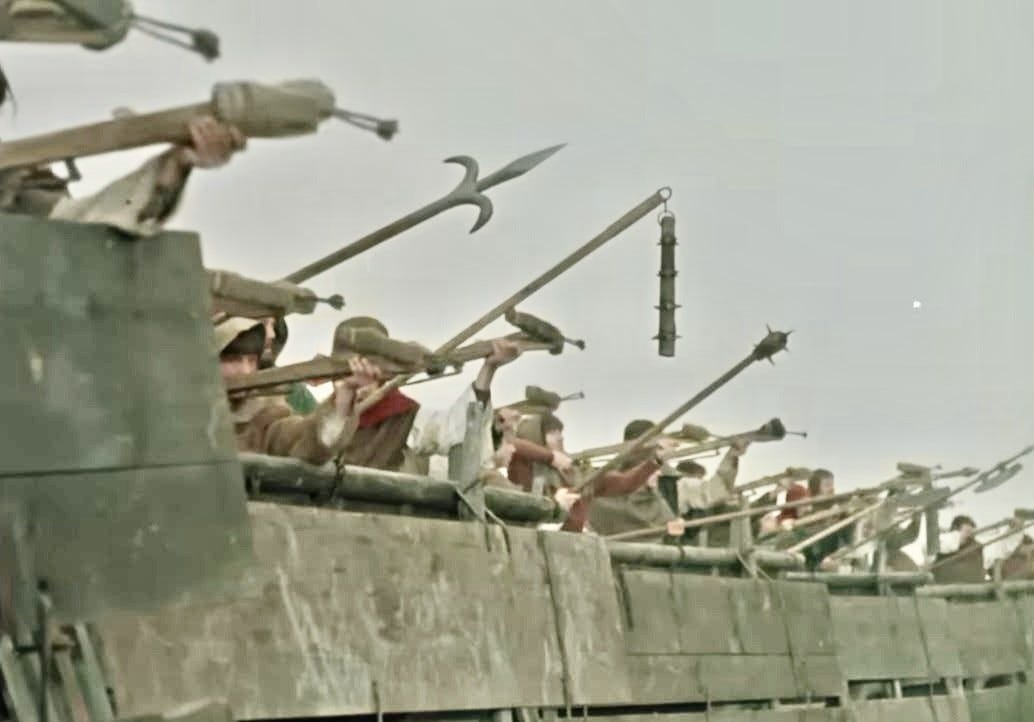
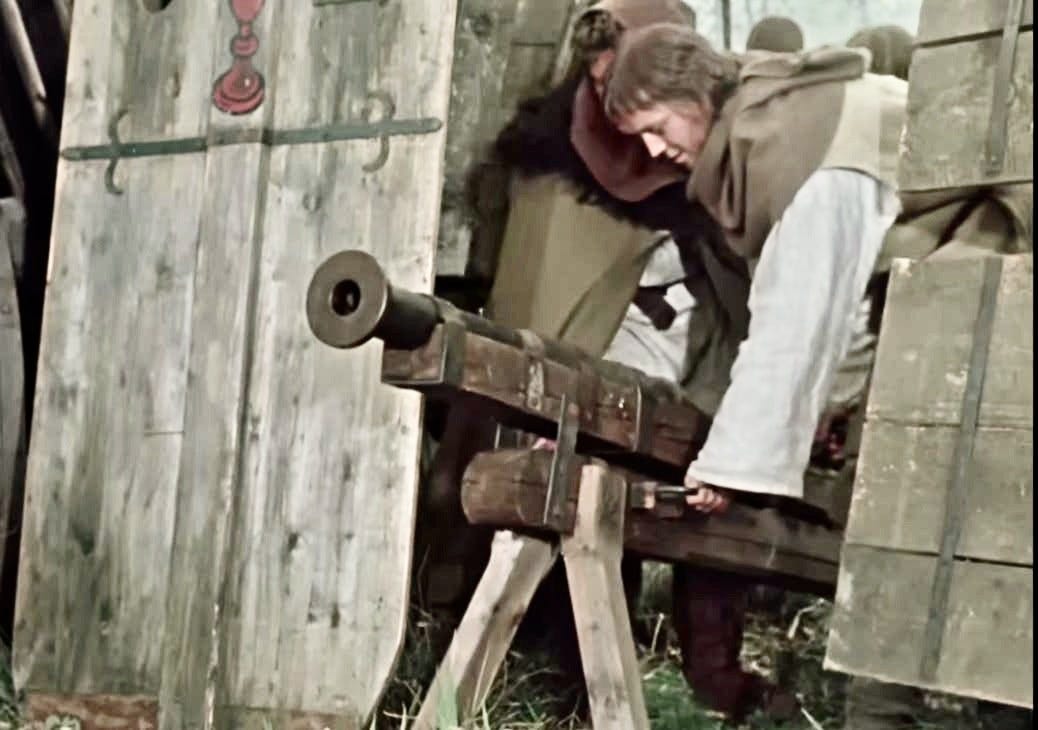
The Hussites also made use of artillery and hand cannons.
NECESSITY OF INNOVATION
Pressed by long-odds and a mighty adversary, the Hussites innovated to achieve victory.
I imagine that when the assembling Imperial knights heard that farmers and townspeople were in rebellion, they probably had certain ideas about the ease of the task before them to suppress the uprising.
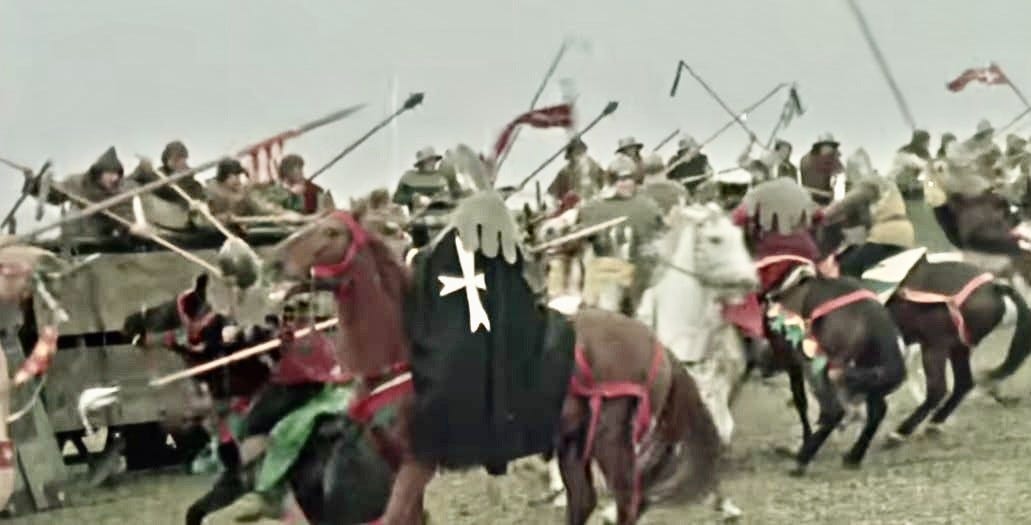
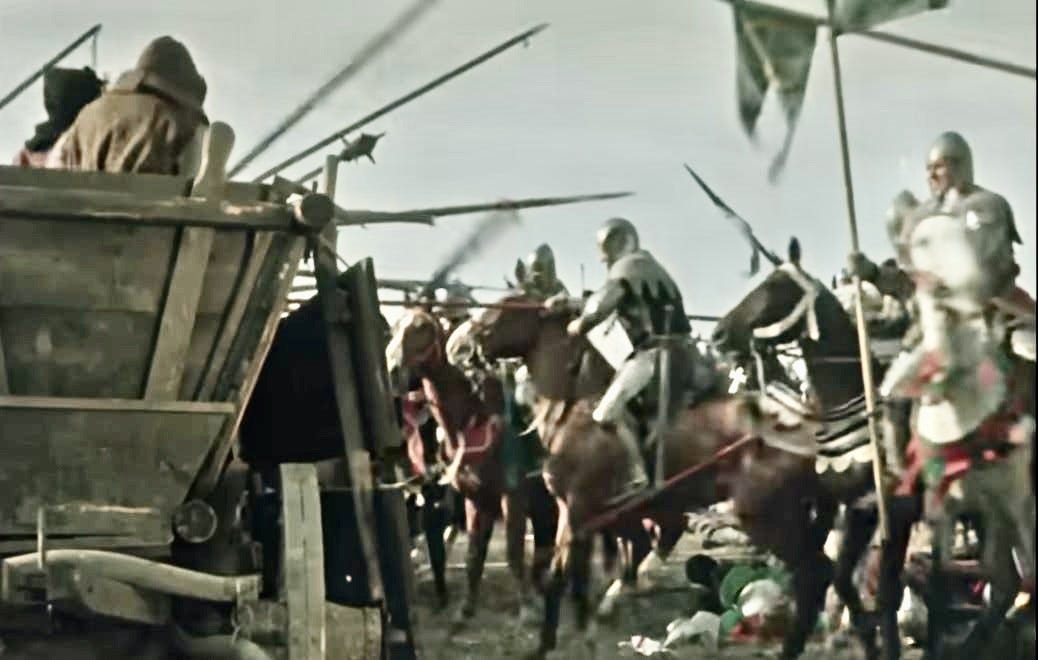
In numerous battles, the Hussites found success versus the Imperial forces sent against them.
RECAP AND CLOSING THOUGHTS
When worldbuilding or telling stories about conflicts between factions, more immersive stories come from considering the advantages and disadvantages of each side.
Story elements should be pressure-tested and sent through a series of questions and thought experiments to keep the best elements and fine-tune the strategy and tactics of each faction and the main characters.
Watch out for handwaving or contrivances to explain why one side would triumph over another. The Hussites needed to flip the script and innovate a way of war that fit their reality to have a chance against the larger forces arrayed against them.
History is a great guide. I hope this quick look at the clash between the Hussites and the Holy Roman Empire has provided an example to help you to strategize like the battle commanders in your stories.
What decisions will your main characters make to outsmart their adversaries?
Liking and restacking this article are easy and awesome ways to show support.
Thank you.
Nice article.
It's worth people remembering that there are certain constants, genuine real-world rules that inform 'how things work'. I like David Eddings' stuff, in general, but in the second series he wrote around Sparhawk he got one thing wrong, which threw me. His knightly armies made short shrift of Roman-esque trained and disciplined heavy infantry in tight formations, and that just does not happen without Gandalf out front throwing magic around on a battlefield-shaping scale.
That being said, Roman style heavy infantry also does not 'just happen', either. A great contrast to the Hussites are the Swiss of the same period, also rebelling against the Empire. Their social cohesion meant that they could recreate disciplined heavy infantry and dominate early modern battlefields in ways not accessible to the Hussites. How much of a technical achievement that was is testified to by the difficulty other nations had in emulating and over-coming the Swiss. (Spoiler alert: multi-modal asymmetrical tactics. Charles the Rash had the right idea but the wrong tools.)
Your blog reminds me of A Collection of Unmitigated Pedantry (which is a definite compliment!). I like your worldbuilding philosophy - I also tend to like to delve deep into various subject matter.
Are you building anything particularly fun right now?